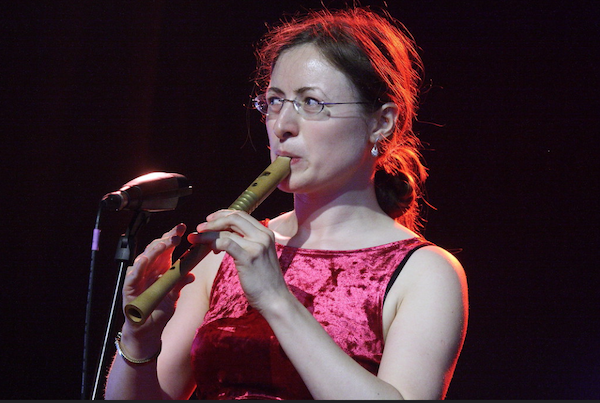
FOLK RECORDER CD - VAL WOOLLARD & FRIENDS

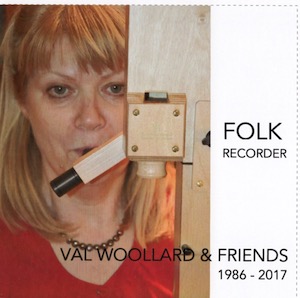
REC COVFollowing interest in the recorder as a folk instrument from two articles on this website, Val Woollard has put together a compilation of tracks on which she has played her various recorders. The first is on the 1986 Bass Instincts album Strippers's Waltz, the last is on the 2017 Rosewood album Rife & Strife & Mirth & Fun.

For any further information about the tunes on this recording or her recorder playing, you can contact Val at This email address is being protected from spambots. You need JavaScript enabled to view it.
You can listen to all the tracks on this recording by clicking the sound file under each track title, but if you'd like a physical CD version of the recording for £5.00 (*P&P incl.), contact Val as above.

For a review of this recording by Dawn Wakefield CLICK HERE


Read more: FOLK RECORDER CD - VAL WOOLLARD & FRIENDS

Clodagh Chapman remembered

Clodagh Chapman who was an original member of Bury Fair (founded in 1977, but originally part of Hageneth Morris) and a founder member of the Haughley Hoofers died in June.  Her funeral will be at the Bury St Edmunds Crematorium in Risby at 9am on Monday 2nd July 2018.  Colourful clothes and Morris kit should be worn to celebrate her 95years.
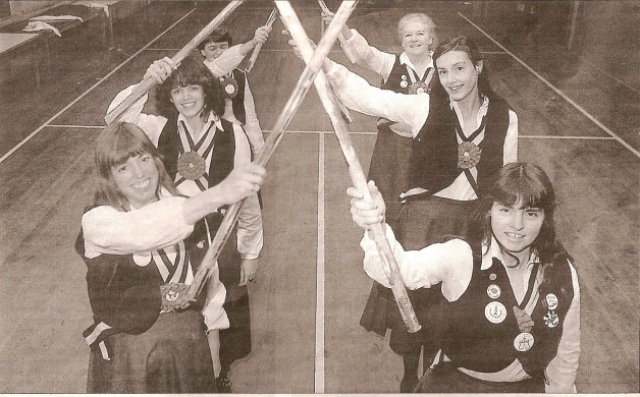
Clodagh (back right) with Bury Fair in 1981

(photo from the East Anglian Daily Times December 2010)

I have known Clodagh since her days with Bury Fair and in 2014 I wrote the piece below for the Mardles Magazine and re-publish it today in her memory.  She is the only person I know who created a dance and an embryonic “tradition”.  Like many new dances some worked and some didn’t but Clodagh had one big “hit”; Fires of August which is still being danced today by people who have never heard of Clodagh Chapman.  The Suffolk Weaver is still also danced by Bury Fair but has not been picked up by other sides as much.

I saw “Fires of August” (in the “Buxhall tradition”) performed four days after she died, not in her memory; no-one dancing it knew she had died.  It was danced because it is a good dance (a bit like Brighton Camp, Stanton Harcourt) and can be made into an entertaining race between musicians and dancers.  Few who dance it will know that it was written by Clodagh in the 1980s.  It was originally performed by Bury Fair but has migrated to Little Egypt Morris Men and Westrafelda and maybe others besides.  Hageneth practiced it and I remember performing it once on the Angel Hill in Bury St Edmunds.  Unfortunately we never mastered it and it disappeared from our programme.  You really need to go to the Little Egypt summer solstice event to see it danced with enthusiasm and at a pace which always impresses the audience.

“It’s not just skipping around waving handkerchiefs”- Clodagh Chapman remembers creating dances.

From Mardles Magazine September 2014 

Read more: Clodagh Chapman remembered

Cara Dillon Live at Cooper Hall

by Simon Haines

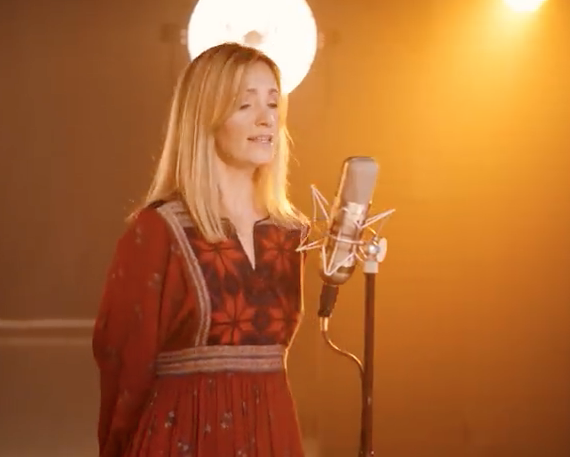
CaraDillon8.20I have followed the fortunes of the Derry singer Cara Dillon for about 30 years, in fact since I first saw her as a teenager in the group Oige, at Colchester Arts Centre. Her voice and her treatment of songs was mesmerizing and I became an instant fan. Cara appeared next in The Equation, a pop-folk band, where she replaced Kate Rusby who had left to start her solo career. The other members of the Equation were Kathryn Roberts and the Lakeman brothers: Sam, Sean and Seth.  
Fast forward a few years and Cara Dillon and Sam Lakeman formed a duo. Rumour has it that the recordings they made for Warner Brothers were never released, so they walked away and started an independent musical life. Eventually Cara Dillon released a solo album and has since gone on from strength to strength to become an internationally acclaimed singer of traditional Irish songs. She has performed her repertoire in a duo with Sam Lakeman but also with other formations of traditional musicians. She has appeared regularly on TV in Transatlantic Sessions. 

Read more: Cara Dillon Live at Cooper Hall

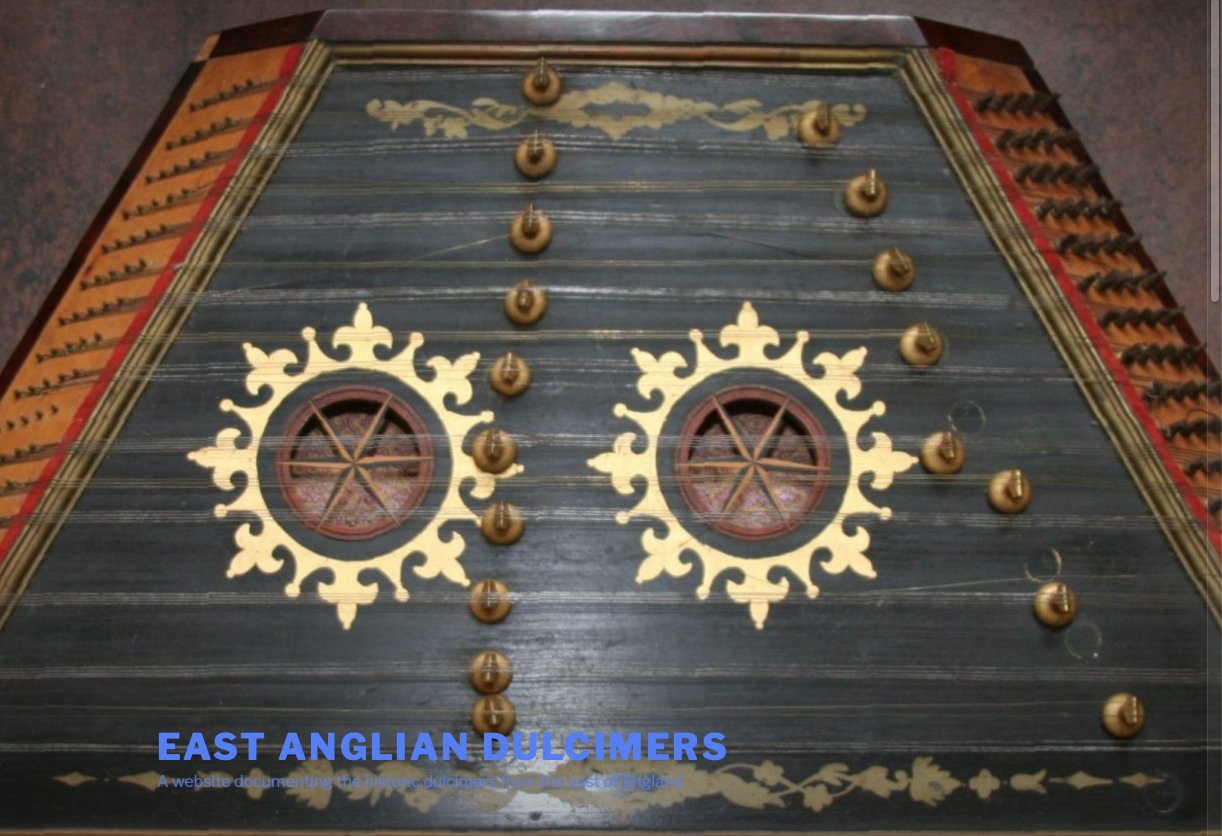
East Anglian dulcimers

The East Anglian Traditional Music Day held on Saturday 27th September in Stowmarket included two sessions devoted to the dulcimer.
Dulcimer

Read more: East Anglian dulcimers

Maypole Re-mixed


Breaking News; - deadline of 11th May extended by EFDSS following Mardles appeal
"I will definitely extend the deadline for applications - we don't want anyone to miss the opportunity.  We really hope we can get a number of young folk dancers to be part of this project". Cassie Tait, Education Manager, English Folk Dance and Song Society

Call for young dancers: Maypole Remixed outdoor dance event

Mardles.org has just received this call for young dancers to appear in Ipswich on 14th July. You can apply as a dance group, or an individual, by completing the expression of interest form on the website by Friday 11 May.  The press release from EFDSS was only released on 25th April and invites young dancers (12 -19 years or up to 25 years for dancers with special needs) to perform as part of the U.Dance 2018 annual dance festival. 

U.Dance 2018

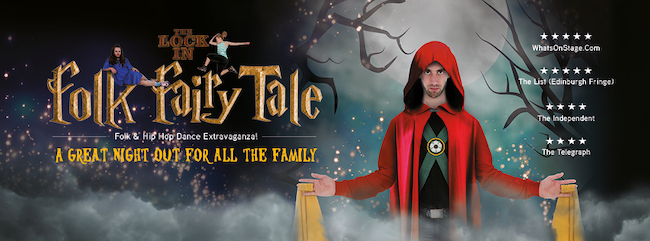
The dancers will perform a new dance work centred on a maypole created by Folk Dance Remixed.  Maypole Remixed will celebrate some of the old and new dance and music cultural heritages to be found in the region - fusing traditional folk dance styles from the East of England with contemporary hip hop dance and especially commissioned recorded and live music.
 
To be included dancers must commit to attending all the rehearsal and performance dates below. Travel bursaries are available.
 
There will be three creative workshops and rehearsals with professional dancers and live musicians, leading to two outdoor performances on Saturday 14 July as part of the U.Dance 2018 festival. 

Rehearsals

Sunday, 24 June, 1 July and 8 July
10.30am–4.30pm (tbc)
Chantry Academy, Mallard Way, Ipswich, Suffolk IP2 9LR

Performances

Saturday 14 July
The Waterfront and one other outdoor location in Ipswich, times tbc
 
For more information please contact the webpage and online form for applications to the project.
 
Direct link to form:
 
Dave Evans
9th May 2018


The Recorder in Folk Music

Article by Dawn Wakefield with contributions from Finn Collinson

Emily AskewEmily AskewThis article was originally written for the Recorder Magazine which is distributed nationally to members of the Society of Recorder Players (SRP) and also members of The European Recorder Teachers Association (ERTA). As a member of ERTA, I wrote this as an invitation to teachers and students to explore more folk music. Adapting it slightly for Mardles, I realise you are already fans of folk music, but you may need some encouraging to appreciate the recorder! It often has a bad press because of people’s memories of beginner primary school classes on mass descant recorders, often with inexperienced teachers. However do read on as there is much more to the recorder than that! For a start there are different sizes and shapes of recorder: sopranino, descant, treble, tenor and bass, all with their individual beautiful sound qualities and in experienced hands they do sound good.  Although this article focuses a lot on printed material, learning tunes by ear is more traditional and is still very much an option, one that was not always made clear in school muisc lessons in the past. Personally though, I find the ability to read music opens up such a wide range of material that I can learn independently, so I would recommend it as a skill, but others I know work more easily by ear. The main thing is to enjoy music and play whatever attracts you.

Whether you are learning ‘just for fun’ or looking for plenty of varied good tunes in between grade exams, folk music both from the British Isles and further afield provides a rich and rewarding source of varied music. I personally have been both a ‘classical’ and a folk player for many years. I run a monthly folk session in a local pub here in North Norfolk and attend others in the area; I have many happy memories of playing for dance while fronting a ceilidh band on descant recorder, and also playing with various informal groups for Balkan folk dancing.

Read more: The Recorder in Folk Music