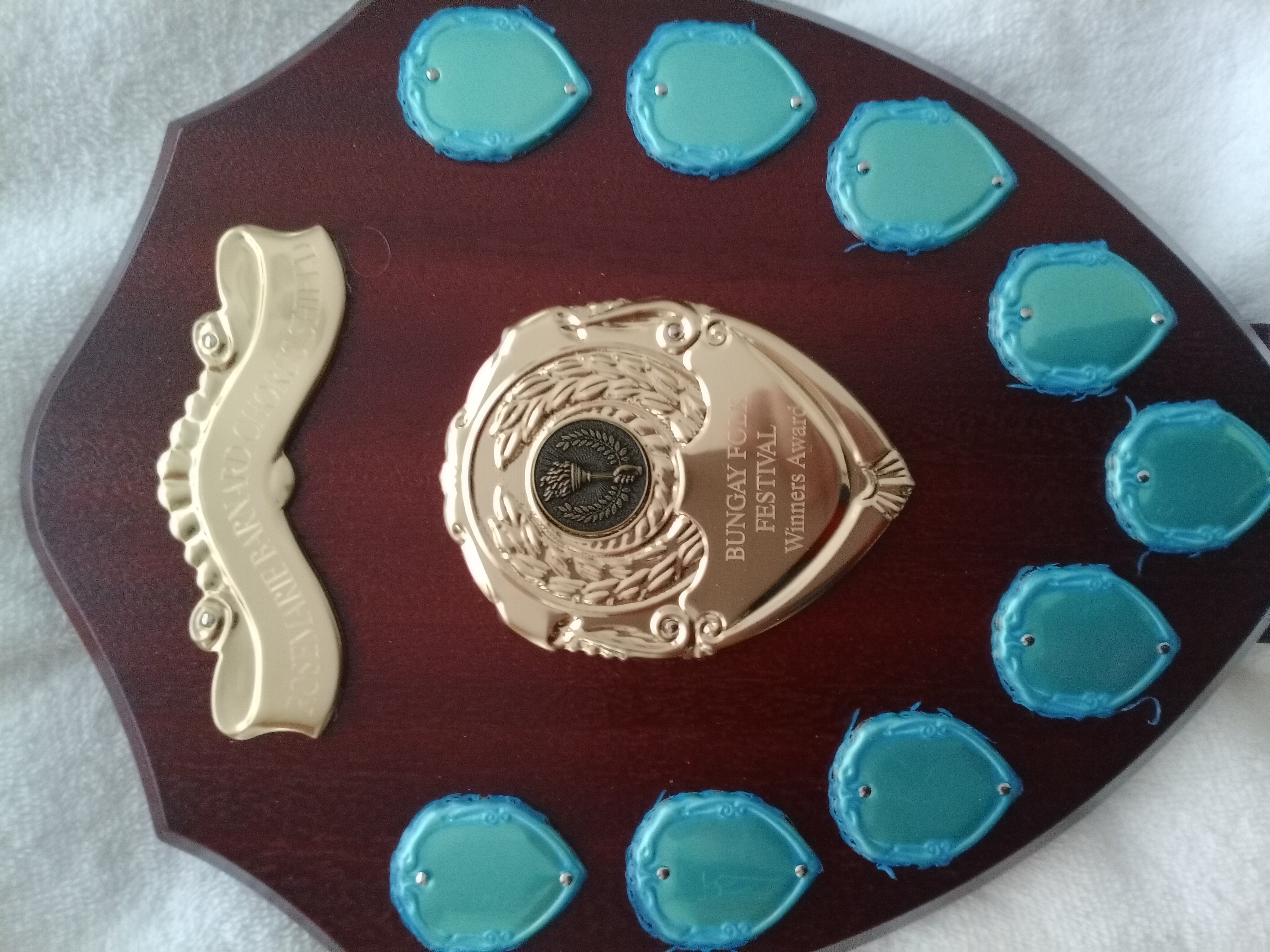

Rosemarie Barnard Shield 2025


CLUBS IN SUFFOLK, NORFOLK, ESSEX and CAMBRIDGESHIRE
Now including news items and appeals for dancers and musicians
Read more: Morris Clubs; Morris and Molly Teams in East Anglia
The story so far
by Sally Barrett
It was after tutoring for The West Country Concertina Players (WCCP) for several years at their workshops held alongside Sidmouth Folk Festival and at their annual ‘beginners’ weekend held at Kilve Court in Somerset that I thought it was time I did something about my ambition to start a new group here in Norfolk. My experience was in teaching very-nearly-absolute beginners, through to those becoming a little more confident, post-beginners/intermediate players.

Together with my husband, I had previously belonged to The East Anglia Concertina Players, a group formed in the early 90s with members travelling here monthly from as far away as Ipswich and Stamford, but this group had diminished in number and eventually folded. The group had, however, set up and run an annual ‘Play in a concertina band for a day’ event called SqueezEast, held in Stamford Arts Centre, and conducted by my husband, Paul.
George Butterworth; Morris Man and composer died on the Somme August 1916

On this day when the nation remembers its’ fallen heroes the Morris fraternity can remember one of their own who died on 5th August 1916.
Butterworth described himself as “a professional Morris dancer” and folk song collector before he became known as the composer who with Housman’s blessing set his poem “A Shropshire Lad” to music. Collecting folk songs and Morris dances was the source of his inspiration and he became a friend of Cecil Sharp and a founder of the English Folk Dance Society in 1911. He was a paid member of the EFDS demonstration Morris dance team three of whom were killed in 1916.
Butterworth had joined as volunteer with the rank of Private but was soon commissioned and served with the Durham Light Infantry. Butterworth won the Military Cross for his defence of a trench in Pozières which was subsequently named after him. He died at the age of 31 from a sniper's bullet on the following night.
Like many who died at the Somme he has no known grave but his name is included amongst the 73,357 listed as missing on the Thiepval Memorial near Pozières. He is also remembered at St Mary’s Church, Deerhurst, near Tewksbury, Gloucester where his Grandfather had been Vicar.
My thanks to the Vaughan Williams Memorial Library, The Guardian and Wikipedia
Author - Dave Bartlett
We are sad to annouce that Paddy Butcher passed away on 21 January 2024. Many of you will have met Paddy in different musical contexts over the years. He will be sadly missed by his friends and by the many musicians who have played with him.
Paddy Butcher is a familiar face in the world of folk music and is often to be found in the folk clubs of East Anglia and beyond. A loyal
supporter of local music sessions, he brings a wealth of good quality songs and tunes and also a folksome gravitas that comes with modesty, humour and good cheer.
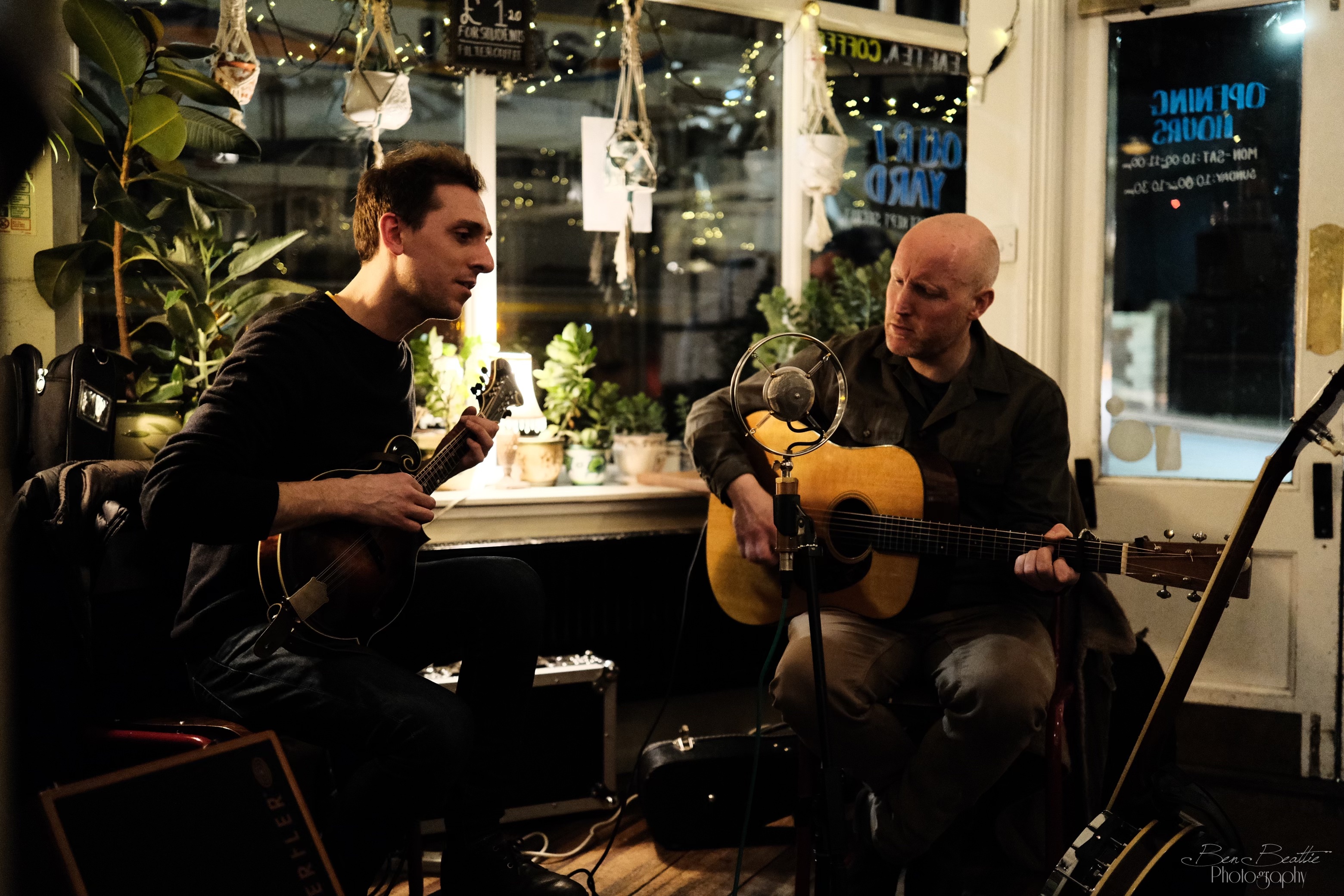
Skiffle music was Paddy’s inspiration in his teen years – a fan of Lonnie Donegan and Chris Barber - he even made a sawn-off tea chest bass for The Rebels an early skiffle band with friends. Although he started off taking piano lessons, Paddy moved on to the guitar and later joined the newly formed Bury St. Edmunds folk club in 1964 at what was then The Cricketers. The club hosted many top folk performers of the day and he became interested in traditional folk music starting Triad with Brian Francis and Bridget Danby. During his involvement with the club they booked Peter Bellamy and Paddy struck up a long-lasting friendship with the folk singer even once singing on stage with him at Cambridge folk festival. It was while Paddy was performing regularly on guitar doing traditional songs as a resident singer at the Bury club that he bought a melodeon and played with the short-lived St Edmundsbury Morris Men. Around this time he was also playing guitar with Geoff Singleton and Tony Preston in a band called Oakenshield.
Serious interest in the melodeon began during Paddy’s sojourn in London in the early 70s where, for a short while, he was MC and resident performer at the Shakespeare’s Head folk club in Carnaby Street. As well as appearing at other local South London clubs he danced with Blackheath Morris but Suffolk called and in 1973 he returned to help form Hageneth Morris Men and join John Goodluck’s band Trunkles. After this came The Suffolk Bell and Horseshoe Band with John and Katie Howson as well as being involved in the formation of Bury Fair Morris and playing trombone for The Haughley Hoofers.
It was when Bury Fair Morris side got invited to a local school to meet a French Dance group that a dance exchange to Angers was arranged. Paddy then embarked on a new phase in his folk music – he was inspired by a French band called Ellebore to take up the hurdy gurdy and started playing French tunes. After many festivals in France and elsewhere he eventually, in 1984, constructed his own instrument. This awesome building project was completed during a year under the watchful eye of gurdy guru Bill Molen (a player and a fine gurdy-maker). Having passed that one on he is now the proud owner of a second self-made hurdy-gurdy which is still going strong. Shortly after 1984 Paddy formed Champetre playing gurdy, along with Bill and others in that band for many happy years.
Video by Bill Johnston
His involvement in a band called RSVP started in the late 80s and continued until recent years. He has also been playing with Bof! since 2000 performing French and Breton dance music at many gigs in the UK and festivals in France. The Bury Folk Collective is proud to have this eminent folk artist and multi-instrumentalist as its patron and is fortunate enough to enjoy his performances at many local club events as well as the annual Bury Folk Festival at Nowton Park – he’s doing a gurdy workshop there this year. Paddy’s musicianship and warm stage presence continues to delight audiences in the region as he sings fine songs and plays guitar, melodeon, hurdy-gurdy, cajon, cas-cas and even occasionally, rumour has it, the trombone.
Bungay Folk festival prepares for its second year
MishraBuilding on the success of its inaugural year, Bungay Folk Festival 2025 is in the traps and ready for the starter's gun. The festival, which takes over the town of Bungay for the weekend of 5-7 Sept is following the same pattern as last year. A wealth of free music and dancing during the daytime and a plethora of exciting workshops to tempt the musically minded.
Clark and ZuppardiEliza Carthy tops the bill this year with a supporting cast of notable folk acts including Mishra, Orchestra of Samples,Tamsin Elliott and Tarek Elazhary, and Sound Tradition. Local acts always feature prominently and we are delighted to welcome back The Castle Singers with a newly composed work by William Drew-Batty.
Bof!More singing delights form the Waveney SHE choir and Heartbeat. We have over 50 different acts on offer so there is much to choose from. There will be French bal / fest-noz with BOF! on the Saturday evening.
We are supported this year by Suffolk County Council, East Suffolk Council, BEBA and Bungay Town Council. As a result we are able to offer a number of free workshops such as yoga, African drumming, Balkan dance, singing the season, have a go melodeon or concertina and a family ceilidh.
The folk picnic on Sunday 7th Sept with a free music stage on the castle bailey hosts The King Driscolls, The Wilswood Buoys, Klezmerized and Rattlebox
Tamsin Elliot Tarek Elazhary
The Fisher Theatre is the place to start and to pick up a festival programme. The rest is up to you! Festival parking this year at Outney Common.
Website: www.bungayfolkfestival.co.uk
A new season begins bringing with it the age-old winter festivals: a mélange of Christian and pre-Christian symbolism, celebrating light at a time when days are short, plenty after harvest and good company.
At Winter Solstice last year we were invited to an old and lonely farmhouse deep in east Suffolk. In the farm kitchen, little changed in centuries, were a group of people drinking and exchanging stories. At a given time those of us who had no part in what was to come, were led out into the night by an elderly but spritely little lady. Leaving signs of habitation behind, she sure-footedly led us through the dark along hedges, round woodland, through pastures and over stiles. I was intrigued, but had no idea of where we were going or, for that matter, where we had come from.
At length we crossed a narrow bridge leading over a river and through a copse to the garden of an old inn. A menacing group of tall, black-robed, faceless and silent figures loomed out of the dark, standing sentinel, their heads lost in greenery.
Lanterns marked a processional way across the garden and a crowd of people quietly waited for – what? Eventually a tiny flickering light, a will-o’-the-wisp, appeared far away across the fields. Slowly approaching it became a dozen flaming torches borne aloft by stern, black-faced, silent men in the garb of C19 farm workers. Crossing the bridge, the only sound the thud of their hob-nailed boots, they filed between the lanterns to the courtyard and formed into sets for Molly dancing, the heavy rhythmic East Anglian form of Morris. As the music began, some of the men stood guard, unsmilingly gazing out at the crowd as if protecting a mysterious and ancient rite. Indeed I did have the feeling that here was something very old, a custom which had survived into the C21 in an isolated pocket of rural England. It sent shivers up my spine.
This was my introduction to Old Glory Molly Dancers and Musicians at the The Locks Inn at Geldeston. Old Glory dance only during the winter, celebrating the winter festivals. Their performances are characterised by a strong sense of theatre and if you want to see them wrap up well and get there early as there is often a torchlight procession to the venue.
Gill Brett